






-
SILICON VALLEY: Indian-origin executive named CEO of Microsoft Gaming - March 5, 2026
-
WASHINGTON: Indian-American lawyer at center of Trump’s biggest legal setback - March 4, 2026
-
TEXAS: ’15 of my cousins came here on H-1B’ - March 3, 2026
-
NEW YORK: Indian-origin doctor shares mother’s immigrant success journey in US - March 2, 2026
-
ARIZONA: Indian-origin scientist wins Arizona State University’s top Science Prize - March 1, 2026
-
WASHINGTON: Balaji Krishnamoorthy becoming Uber CFO amid ongoing visa row - February 28, 2026
-
LUCKNOW: Prime Minister Narendra Modi on HCL-Foxconn chip facility in UP - February 27, 2026
-
WASHINGTON: 55% Indian Americans Disapprove Of Trump’s India Policies: Survey - February 26, 2026
-
WASHINGTON: Trump Praises Indian American Harmeet Dhillon Amid Harvard Case - February 26, 2026
-
MUMBAI: Ranbir Kapoor to set up new RK Studios - February 25, 2026


SINGAPORE CITY : India Wheat Export Ban Hits Chewy Chapati Eating Punjabis In Singapore
SINGAPORE CITY : India’s ban on wheat exports since May has hit Singapore eateries serving soft chewy chapati, mostly for Punjabis, as the cost has gone up by three times on imports of the similar in quality staple north Indian basic food material from other countries amidst the war in Ukraine, according to a media report on Tuesday.
Supermarket chain FairPrice said the supply of wheat flour had been low due to increased demand in the past few weeks, possibly due to the wheat and flour ban from India.
FairPrice’s suppliers are sourcing wheat flour from various countries like Sri Lanka, Australia, Canada, and the United States, according to a report by The Straits Times.
“The (wheat) flour shortage will affect our business very badly. We cannot pass all the cost to our customers, we have to try and keep prices low,” said Mathavan Adi Balakrishnan, managing director of Sakunthala’s, one of the leading eateries in the Little India precinct here.
The restaurant used to pay SGD 5 (USD 3.48) a kg for wheat flour from India, but the flour from Dubai now costs SGD 15 (USD 10.45) a kg.
Singapore imports between 200,000 and 250,000 tonnes of wheat and 100,000 to 120,000 tonnes of wheat flour annually, according to data from the United Nations.
In 2020, 5.8 per cent of Singapore’s total wheat flour imports were from India, The Business Times reported.
The bulk of the city-state wheat flour imports come from Australia, the US, and Canada.
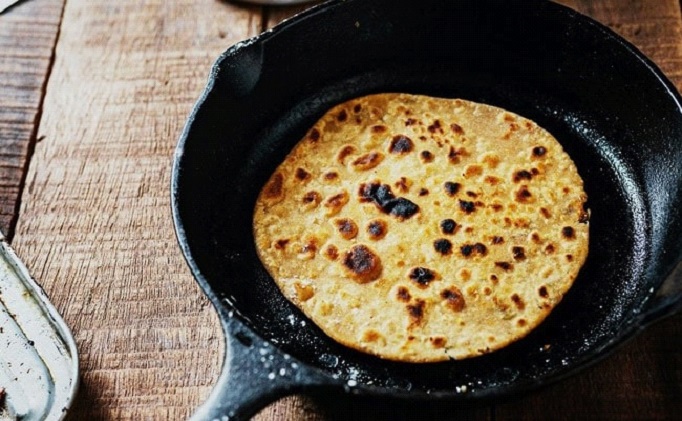
Wheat flour from India, albeit making up only a small proportion of total imports, is sought after by Indian eateries here as it produces soft and chewy chapati, an Indian staple.
India, the world’s second-biggest producer of wheat, stopped exporting the grain and its flour in May in an attempt to put a cap on skyrocketing domestic prices after a heatwave parched crops and affected wheat supply.
The ban came amid Ukraine’s wheat exports being curtailed by the ongoing Russia-Ukraine war.
Ukraine used to be the fourth-biggest supplier of wheat to the world, accounting for about 9 per cent of the global wheat trade.
Some eateries have suspended menu items like chapati, poori bhaji, and tandoori as all of them require wheat flour to make.
“It will be a drastic change, especially for people like Punjabi workers who eat up to six chapatis per meal every day,” said S. Mahenthiran, director of Gayatri, a popular restaurant in the Little India precinct of Singapore.
Punjabi workers make up the bulk of Mahenthiran’s customers.
Stores here that import wheat flour primarily from India are sourcing for alternatives.
Megastore Mustafa Centre in Serangoon Road is looking to import wheat flour from the Middle East and Britain.
Its purchasing director, Mohd Saleem, said Mustafa shoppers can expect to pay more for flour due to the increase in freight costs. He did not specify how big an increase consumers can expect.
Owner of Punjabi and Bengal eatery Mustard Singapore, Radhika Abbi, 51, said many Indian eateries here will have to struggle with higher costs once their existing flour stocks from India run out.
She used to pay SGD 2 (USD 1.39) a kg for wheat flour but is now looking at paying close to SGD 8 (USD 5.57).
Abbi said the quality and texture of her eatery’s chapati would be affected when it is forced to switch to another source of wheat flour.
About the Author

Some Related Posts
-

SINGAPORE: Kolkata-born NRI industrialist Prasoon Mukherjee to lead Singapore business body
SINGAPORE: Kolkata-born NRI industrialist Prasoon Mukherjee has been -

SINGAPORE: Indians Can Now Work As Cooks In Singapore As Island-Nation Bends Rules
SINGAPORE: Singapore, in a move to address workforce shortages in its -

SINGAPORE CITY : Singapore Airlines confirms talks on with Tata for merging Vistara with Air India
SINGAPORE CITY : Air India will soon join the league of global airlines lik -

SINGAPORE CITY : India ranks fourth with 24 firms in ‘Forbes Asia best under a billion’
SINGAPORE CITY : Last week Forbes Asia published its 2022 edition of the be -

SINGAPORE CITY: Air India’s New CEO Designate Campbell Wilson Resigns from Singapore Airlines
SINGAPORE CITY: Campbell Wilson, who has been picked by Tata Sons to lead A