






-
SILICON VALLEY: Indian-origin executive named CEO of Microsoft Gaming - March 5, 2026
-
WASHINGTON: Indian-American lawyer at center of Trump’s biggest legal setback - March 4, 2026
-
TEXAS: ’15 of my cousins came here on H-1B’ - March 3, 2026
-
NEW YORK: Indian-origin doctor shares mother’s immigrant success journey in US - March 2, 2026
-
ARIZONA: Indian-origin scientist wins Arizona State University’s top Science Prize - March 1, 2026
-
WASHINGTON: Balaji Krishnamoorthy becoming Uber CFO amid ongoing visa row - February 28, 2026
-
LUCKNOW: Prime Minister Narendra Modi on HCL-Foxconn chip facility in UP - February 27, 2026
-
WASHINGTON: 55% Indian Americans Disapprove Of Trump’s India Policies: Survey - February 26, 2026
-
WASHINGTON: Trump Praises Indian American Harmeet Dhillon Amid Harvard Case - February 26, 2026
-
MUMBAI: Ranbir Kapoor to set up new RK Studios - February 25, 2026


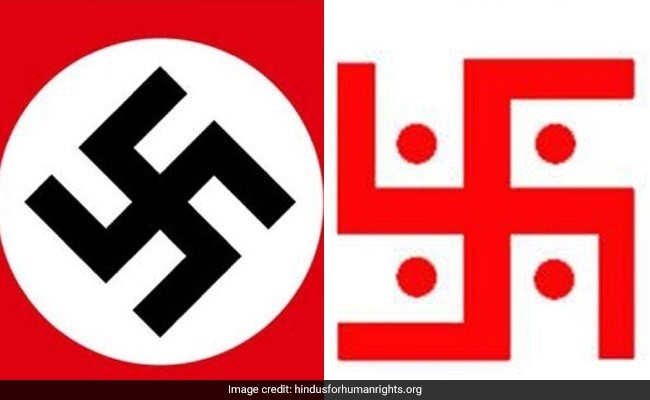
OTTAWA: Indian-Origin MP Urges Canada To Distinguish Between Swastika, Nazi Symbol
OTTAWA: An Indian-origin Canadian lawmaker has urged the people of Canada and the country’s government to distinguish between the ‘Swastika’, an ancient and auspicious symbol for Hindus with the ‘Hakenkreuz’, a 20th century Nazi symbol of hate and not to put the two in the same league.
The move has been welcomed by Hindu Americans, who had slammed recent attempts by certain vested interests in Canada to use this as an occasion to fuel hatred against Hindus in Canada.
“On behalf of over one million Canadians of several religious faiths and in particular Hindu-Canadians and as a Hindu-Canadian myself, I call upon members of this house and all Canadians to distinguish between the Hindu religious sacred symbol Swastika and the Nazi symbol of hatred called Hakenkreuz in German or the hooked cross in English,” Canadian Member of Parliament Chandra Arya said.
Speaking on the floor of the Canadian Parliament last week, Mr Arya said that in the ancient Indian language of Sanskrit, Swastika means “that which brings good luck and well-being.”
“This ancient and greatly auspicious symbol of the Hindu religion continues to be used today at our Hindu temples, in our religious and cultural rituals, entrances to our homes and in our daily life. Please stop calling the Nazi symbol of hatred as Swastika,” he said.
“We support the ban of the Nazi symbol of hatred Hakenkreuz or the hooked cross. But calling it Swastika is to deny us Hindu-Canadians our religious right and freedom to use our sacred symbol Swastika in our daily life,” Mr Arya said.
The Coalition of Hindus of North America (CoHNA), in a statement, welcomed the remarks of Mr Arya for clearly expressing his concerns regarding efforts to declare the Swastika as a symbol of hatred in Canada.
“We thank MP Arya for taking a firm stand on this extremely important matter for over half a million Canadian Hindus and close to two billion Hindus, Buddhists, Jains and others for whom the Swastika and its equivalents are deeply sacred and auspicious,” said Nikunj Trivedi, president of CoHNA.
“Since 2020, our Swastika Education and Awareness Campaign has partnered with Buddhists, Jain, Jewish and indigenous groups to ensure a better understanding and mutual respect around this ancient and sacred symbol,” he said.
As part of these efforts, CoHNA recently organised an interfaith dialogue with Jewish, Buddhist, Jain and Hindu leaders to highlight multiple perspectives on the topic and discuss ways to move forward.
In the recent past, Canadian Prime Minister Justin Trudeau and Indian-origin leader Jagmeet Singh have made statements disrespecting Swastikas.
In February, amidst massive protests by hundreds of truck drivers against Canada’s Covid restrictions, New Democratic Party (NDP) leader Singh tweeted, “Swastikas and Confederate flags have no place in Canada.
About the Author

Some Related Posts
-

TORONTO: Canadian Journalist Flags ‘Anti-India Sentiment’ After Murders Of 2 Indians
TORONTO: After two Indian students in Toronto were killed in a span of one -

TORONTO: Indian-origin author Deepak Chopra named in newly released Epstein files: Who is he and what do the emails show?
TORONTO: Newly released documents from Jeffrey Epstein’s digital archive -

TORONTO : Canada set to open employment doors to over 2 lakh family members of temporary workers
TORONTO : To address the growing labour shortage, the Canadian government h -

TORONTO : Punjabi 4th most spoken language in Canada; sees 49% jump in 5 years
TORONTO : Punjabi has become the fourth most spoken language in Canada, reg -
TORONTO : Over 1 Lakh Indians Gave Up Citizenship In 2021: Minister In Lok Sabha
TORONTO : A total of 1,63,370 Indians relinquished Indian Citizenship last