






-
LONDON: Fresh off double ton in U-19 Asia Cup, Navi Mumbai lad Abhigyan Kundu eyes U-19 World Cup success - January 4, 2026
-
LONDON: ICC rates Eden Gardens’ India-South Africa turner pitch ‘satisfactory’ - January 3, 2026
-
SILICON VALLEY: Satya Nadella Reveals He’s Spending Free Time Designing A Cricket App - January 2, 2026
-
WASHINGTON: Desi power surge: How Indian-Americans shaped Trump’s 2nd term in 2025 - January 1, 2026
-
KUWAIT CITY: Kuwait limits expats’ stay abroad to six months under new residency rules - December 31, 2025
-
RIYADH: More Indians Deported From Saudi Arabia Than US In Five Years - December 30, 2025
-
MUMBAI: Jaya Bachchan opens up about Amitabh Bachchan, how she is as a mother, and the importance of discipline - December 29, 2025
-
MELBOURNE: Sikh student in Australia wins case; was initially asked to get clean-shaven for wearing PPE mask - December 28, 2025
-
WASHINGTON: ‘H1-B should be reserved for top talent, not mediocre….’: Indian-origin venture capitalist says ‘visas must be reduced in number’ - December 27, 2025
-
BERN: Lakshmi Mittal leaves UK over ‘inheritance tax’, now a Swiss resident, claims report - December 26, 2025


SAN FRANCISCO: Indian-Origin Founder Unveils Wearable Device That Records Every Moment Of Your Life
SAN FRANCISCO: Advait Paliwal, an Indian-origin entrepreneur, has recently introduced a wearable AI device called Iris, designed to provide users with “infinite memory.” According to Paliwal, the device captures “pictures every minute,” which are stored either on the device or in the cloud, allowing users to preserve life’s small moments and recognize patterns often overlooked.
In a series of tweets, Mr Paliwal, who is based in San Francisco, explained that Iris not only organises the photos into a timeline but also uses AI to generate captions and help users recall forgotten details. Additionally, the device features a “focus mode,” which detects when the wearer is distracted and offers reminders to refocus.
Mr. Paliwal shared that the design of Iris is inspired by the evil eye symbol. He developed the device over the summer at the Augmentation Lab in Cambridge, part of a two-month AI and hardware talent accelerator program. After the program, Mr Paliwal presented Iris to over 250 attendees at the MIT Media Lab, where he received positive feedback, with many expressing interest in owning the device.
Highlighting its potential, Mr Paliwal suggested that Iris could offer safety and health benefits, such as aiding doctors in understanding patients’ daily habits or ensuring workplace safety compliance. In elderly care, the device could help caregivers monitor patients without being intrusive.
However, after Mr Paliwal shared his post on X (formerly Twitter), reactions were mixed. While some users expressed excitement, others raised privacy concerns. One person commented, “It’s an interesting concept, but I wouldn’t want to interact with someone wearing this, taking a photo every minute.” Paliwal responded by pointing out that people are already “constantly taking mental photos.”
Others were more enthusiastic, with one user noting, “I’ve been searching for a device like this for years! A picture every minute should be enough if it archives, organizes, labels, and retrieves them.” Another user praised the concept, saying, “Love the idea. The design and name are perfect. Great work!”
About the Author

Some Related Posts
-
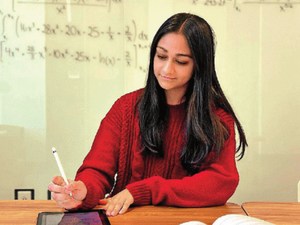
PENNSYLVANIA: 22-year-old Indian-origin engineer rewrites wind energy maths
PENNSYLVANIA: On a quiet afternoon in University Park, Pennsylvania, aerosp -

TEXAS: Meet Gopi Thotakura, Indian Who Will Soon Go To The Edge Of Outer Space
TEXAS: In an unprecedented leap towards the stars, pilot Gopichand Thotakur -
WASHINGTON: Who Is Aroh Barjatya, Indian-Origin Researcher Who Led Recent NASA Mission
WASHINGTON: Aroh Barjatya, an India-born researcher, led NASA’s missi -
WASHINGTON: Indian-American Shohini Sinha To Head FBI’s Field Office In Salt Lake City
WASHINGTON: Indian-American Shohini Sinha has been appointed as the Federal -
WASHINGTON: Arti Prabhakar, Joe Biden’s Science Adviser, Urges AI Partnership With India
WASHINGTON: The United States and like-minded countries like India need to