






-
SILICON VALLEY: Indian-origin executive named CEO of Microsoft Gaming - March 5, 2026
-
WASHINGTON: Indian-American lawyer at center of Trump’s biggest legal setback - March 4, 2026
-
TEXAS: ’15 of my cousins came here on H-1B’ - March 3, 2026
-
NEW YORK: Indian-origin doctor shares mother’s immigrant success journey in US - March 2, 2026
-
ARIZONA: Indian-origin scientist wins Arizona State University’s top Science Prize - March 1, 2026
-
WASHINGTON: Balaji Krishnamoorthy becoming Uber CFO amid ongoing visa row - February 28, 2026
-
LUCKNOW: Prime Minister Narendra Modi on HCL-Foxconn chip facility in UP - February 27, 2026
-
WASHINGTON: 55% Indian Americans Disapprove Of Trump’s India Policies: Survey - February 26, 2026
-
WASHINGTON: Trump Praises Indian American Harmeet Dhillon Amid Harvard Case - February 26, 2026
-
MUMBAI: Ranbir Kapoor to set up new RK Studios - February 25, 2026


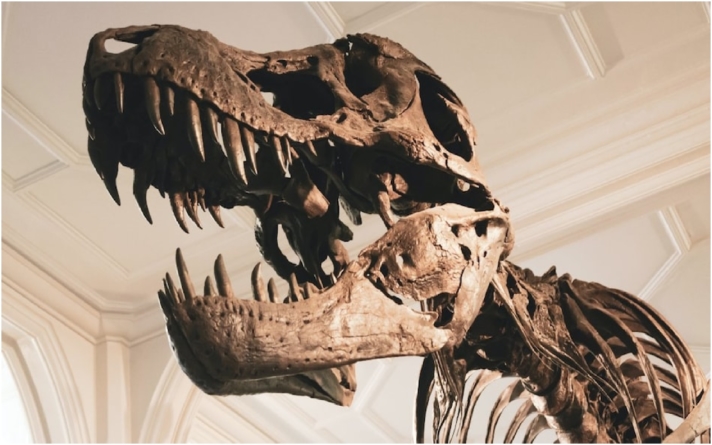
MEXICO CITY : Dinosaur-Killing Asteroid May Have Hit Earth During Spring, Research Suggests
MEXICO CITY : The extinction of dinosaurs took place about 66 million years ago but we are yet to know the full impact of the asteroid that wiped out this species. Scientists are still studying the disaster and continuously unearthing new aspects of the devastating impact.
Now, researchers say that if the asteroid’s trajectory had been slightly different, it would have missed the Earth. They also feel that the asteroid’s impact site and the time of the year could have made a difference.
Studying these possibilities, researchers have found that the asteroid hit Mexico’s Yucatan Peninsula in spring or early summer.
Their findings are based on fish fossils from Tanis, a site in North Dakota, US. Freshwater creatures are believed to have all perished just hours after the asteroid impact because of a massive water surge as a result of an earthquake.
Researchers analysed the fish fossils, which still preserved growth lines in their bones. These growth lines are like barcodes. They enable paleontologists to deduce details like whether or not the fish had plenty of food during a particular season of their lives.
According to the paper published in the Scientific Reports journal, Robert DePalma, a doctoral student at the University of Manchester who led the study, and his colleagues found that the bones of fish grow a darker layer during spring and summer, while lighter layers form during fall and winter. The last growth lines observed in the bones of fish fossils from Tanis were light, suggesting the asteroid hit in the spring or early summer.
DePalma said in a statement to ZME Science that they now have “compelling evidence” which changes the way we think of the Cretaceous–Paleogene (K–Pg) extinction event, also called the fifth mass extinction. The researcher said the study can also better prepare us for future ecological and environmental hazards as certain animals are more vulnerable during certain times of the year.
The asteroid impact 66 million years ago had unleashed the force of 10 billion Hiroshima A-bombs and released gigatons of Sulphur and carbon dioxide, which could have lowered surface air temperatures by a staggering 26 degrees Celsius — enough to devastate plant life and everything else along the food chain.
About the Author

Some Related Posts
-

ARIZONA: Indian-origin scientist wins Arizona State University’s top Science Prize
ARIZONA: Indian-origin scientist Meha Jain of the University of Michigan Sc -

HOUSTON: Indian-Origin Climate Scientist Wins Prestigious Crafoord Prize In US
HOUSTON: Indian-origin climate scientist Veerabhadran Ramanathan has been a -

CALIFORNIA: Indian-origin scientist Shri Kulkarni wins Royal Astronomical Society’s Gold Medal
CALIFORNIA: Shri Kulkarni, an Indian-origin astronomer and one of the world -

PENNSYLVANIA: 22-year-old Indian-origin engineer rewrites wind energy maths
PENNSYLVANIA: On a quiet afternoon in University Park, Pennsylvania, aerosp -

SAN FRANCISCO: Indian-Origin Founder Unveils Wearable Device That Records Every Moment Of Your Life
SAN FRANCISCO: Advait Paliwal, an Indian-origin entrepreneur, has recently