






-
SILICON VALLEY: Indian-origin executive named CEO of Microsoft Gaming - March 5, 2026
-
WASHINGTON: Indian-American lawyer at center of Trump’s biggest legal setback - March 4, 2026
-
TEXAS: ’15 of my cousins came here on H-1B’ - March 3, 2026
-
NEW YORK: Indian-origin doctor shares mother’s immigrant success journey in US - March 2, 2026
-
ARIZONA: Indian-origin scientist wins Arizona State University’s top Science Prize - March 1, 2026
-
WASHINGTON: Balaji Krishnamoorthy becoming Uber CFO amid ongoing visa row - February 28, 2026
-
LUCKNOW: Prime Minister Narendra Modi on HCL-Foxconn chip facility in UP - February 27, 2026
-
WASHINGTON: 55% Indian Americans Disapprove Of Trump’s India Policies: Survey - February 26, 2026
-
WASHINGTON: Trump Praises Indian American Harmeet Dhillon Amid Harvard Case - February 26, 2026
-
MUMBAI: Ranbir Kapoor to set up new RK Studios - February 25, 2026


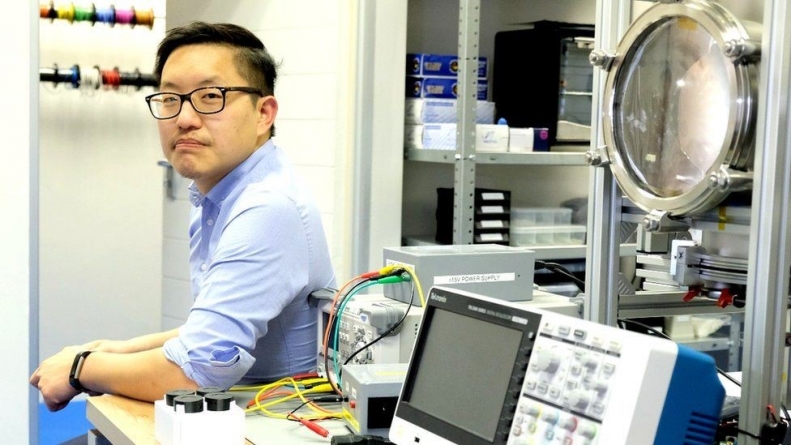
JOHANESBURG: The African tech firm hoping to power space missions
JOHANESBURG: “Most satellites are simply
computers that are tossed out the side of a rocket [that] are tumbling in
space,” says Jonathan Lun.
Mr Lun
and his Cape Town-based company, Hypernova Space Technologies, are keen to give
these tumbling satellites a little bit more autonomy.
The firm
has developed a thruster system that could give even the smallest types of
satellites the capacity to move around.
The
company is hopeful that their technology could be applied to nanosatellites
which are small satellites weighing under 10kg and, even applied to the tiniest
of them all, the 10cm cubes known as cubesats.
There are
an estimated 3,200 nanosatellites floating around in orbit already, and that
number is expected to grow rapidly in the near future: SpaceX alone is in the process of launching a constellation of around 42,000 satellites.
But
experts are concerned that this explosion in numbers may lead to problems.
Without
manoeuvrability – the capacity to change direction – nanosatellites risk
colliding with each other, causing space debris which might cause problems for
other missions.
Mobility
would also make it much easier to retrieve, or dispose of, satellites once
their working life was over.
But as
nanosatellites are deliberately designed to be small and cheap, any new thruster
technology needs to be simple to be commercially viable.
Around a
decade ago, Mr Lun came across an interesting thruster technology that had
previously been researched by Nasa but never fully pursued. He found that an
electric reaction could be used to vaporise solid metal fuel, a process which
then created a jet of fast-moving plasma that could propel a satellite along.
One big
advantage to using solid fuels in this way would be that the material would be
stable enough to add to a thruster-system prior to launch – removing the need
for any last-minute fuelling before sending satellites off into space.
“They
don’t have to worry about filling it up, they don’t have to worry about [the
material] being toxic, they don’t have to worry about it during launch, something
breaking and leaking,” adds Stephen Tillemans, the head of engineering at
Hypernova.
Mr
Tillemans confirms the company has successfully run several environmental
tests, such as, running the thruster in a vacuum, in extreme temperatures, and
with high vibration. Hypernova’s first mission in space will be in early 2022
with EnduroSat, a company based in Bulgaria.
Together,
the companies are aiming to assess the performance of the thruster technology
in space, including measuring its force and demonstrating that it can
successfully change the orbit of a satellite.
Hypernova
are not alone in their research, other organisations are also investing in
developing the thruster technology that could propel small satellites through space,
including MIT in the US, and the European Space Agency
and its Helicon Plasma Thruster.
Hypernova
is also collaborating with other players in the South African space industry,
such as the Electrical and Electronic Engineering department at Stellenbosch
University, which is currently developing a technology that would allow
satellites to dock with each other.
Looking
much further in to the future, Mr Lun is confident that it would be possible to
scale-up Hypernova’s thruster technology so it could potentially be used for
much bigger satellites and more ambitious missions.
He is
even hopeful that using metal as a fuel will facilitate bigger opportunities
for the industry as a whole because thrusters could potentially be powered
using substances found in space – both substances mined in-situ, or collected
from space debris, for instance.
“So,
if we can now switch over from rare expensive liquids and gases as fuel
sources, to move stuff around in space with cheap and abandoned iron ore or
other metals, it changes the game completely.”
About the Author

Some Related Posts
-

LUCKNOW: Prime Minister Narendra Modi on HCL-Foxconn chip facility in UP
LUCKNOW: Prime Minister Narendra Modi has hailed chip manufacturing in Indi -

JOHANNESBURG: Launch of BRICS India 2026 Logo, Theme and Website by the External Affairs Minister
JOHANNESBURG: External Affairs Minister Dr. S. Jaishankar unveiled the logo -

SILICON VALLEY: Infosys CEO Denies Employee Was Deported From US
SILICON VALLEY: Infosys CEO and Managing Director Salil Parekh denied claim -

SILICON VALLEY: Satya Nadella Reveals He’s Spending Free Time Designing A Cricket App
SILICON VALLEY: Satya Nadella has been spending his free time coding and de -

WASHINGTON: ‘H1-B should be reserved for top talent, not mediocre….’: Indian-origin venture capitalist says ‘visas must be reduced in number’
WASHINGTON: Indian-origin venture capitalist Asha Jadeja Motwani doubled do