




-
SILICON VALLEY: Indian-origin executive named CEO of Microsoft Gaming - March 5, 2026
-
WASHINGTON: Indian-American lawyer at center of Trump’s biggest legal setback - March 4, 2026
-
TEXAS: ’15 of my cousins came here on H-1B’ - March 3, 2026
-
NEW YORK: Indian-origin doctor shares mother’s immigrant success journey in US - March 2, 2026
-
ARIZONA: Indian-origin scientist wins Arizona State University’s top Science Prize - March 1, 2026
-
WASHINGTON: Balaji Krishnamoorthy becoming Uber CFO amid ongoing visa row - February 28, 2026
-
LUCKNOW: Prime Minister Narendra Modi on HCL-Foxconn chip facility in UP - February 27, 2026
-
WASHINGTON: 55% Indian Americans Disapprove Of Trump’s India Policies: Survey - February 26, 2026
-
WASHINGTON: Trump Praises Indian American Harmeet Dhillon Amid Harvard Case - February 26, 2026
-
MUMBAI: Ranbir Kapoor to set up new RK Studios - February 25, 2026


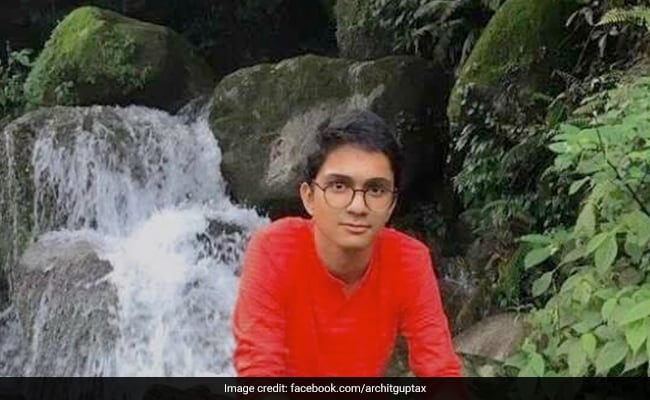
SINGAPORE CITY: Indian-Led Team In Singapore To Send Machine Learning Software To Space
SINGAPORE CITY: An Indian is among five students from Singapore’s prestigious Nanyang Technological University (NTU) whose machine learning software will be going up on the International Space Station.
The NTU team, led by Archit Gupta, is getting an opportunity to test its project in the ISS after winning a competition on developing innovative ways to use artificial intelligence for space applications earlier this.
In the course of next three months, the team will install the software into an Artificial Intelligence box, a tiny supercomputer. Once that’s done, it will be physically transported to the space station.
“The purpose of the ISS is to collect experimental data, and if (single event upsets) happen, then the sanctity of the data gets compromised, and the experiment is wasted,” Mr Gupta, a second-year student from the School of Computer Science and Engineering told The Straits Time.
The disruptions are called single event upsets, which tend to afflict sensitive electrical components in space.
The 20-year-old’s software – Cremer – will a play a key role in predicting hardware disruptions on the ISS or satellites which can cause such space vehicles to go off course or crash, in the worst outcomes.
Cremer was named after an existing software called Creme, which also addresses single event upsets. “We wanted to build a better version of it, and hence we named it Cremer,” said Mr Gupta.
The project of Archit Gupta, who completed his schooling from the Delhi Public School, is said to be a game changer in space technology.
The other members of the NTU team are third-year business student Sim See Min, 22, third-year mechanical engineering student Deon Lim, 24, and second-year electrical and electronic engineering student Rashna Ahmed, 21.
About the Author

Some Related Posts
-
SINGAPORE: Kolkata-born NRI industrialist Prasoon Mukherjee to lead Singapore business body
SINGAPORE: Kolkata-born NRI industrialist Prasoon Mukherjee has been -

SINGAPORE CITY: First Cyber Policy Dialogue between India and Singapore
SINGAPORE CITY: The First Cyber Policy Dialogue between India and Singapore -

SINGAPORE CITY: Visit of External Affairs Minister, Dr. S. Jaishankar to the Republic of Singapore
SINGAPORE CITY: External Affairs Minister (EAM), Dr. S. Jaishankar paid an -
SINGAPORE: Indian-Origin Singapore Minister’s Pitch To Introduce Children To Tamil Language
SINGAPORE: An Indian-origin minister in Singapore has emphasised the import -
SINGAPORE CITY: 17th India-Singapore Foreign Office Consultations (FOC)
SINGAPORE CITY: The 17th Foreign Office Consultations (FOC) between India a