




-
SILICON VALLEY: Indian-origin executive named CEO of Microsoft Gaming - March 5, 2026
-
WASHINGTON: Indian-American lawyer at center of Trump’s biggest legal setback - March 4, 2026
-
TEXAS: ’15 of my cousins came here on H-1B’ - March 3, 2026
-
NEW YORK: Indian-origin doctor shares mother’s immigrant success journey in US - March 2, 2026
-
ARIZONA: Indian-origin scientist wins Arizona State University’s top Science Prize - March 1, 2026
-
WASHINGTON: Balaji Krishnamoorthy becoming Uber CFO amid ongoing visa row - February 28, 2026
-
LUCKNOW: Prime Minister Narendra Modi on HCL-Foxconn chip facility in UP - February 27, 2026
-
WASHINGTON: 55% Indian Americans Disapprove Of Trump’s India Policies: Survey - February 26, 2026
-
WASHINGTON: Trump Praises Indian American Harmeet Dhillon Amid Harvard Case - February 26, 2026
-
MUMBAI: Ranbir Kapoor to set up new RK Studios - February 25, 2026


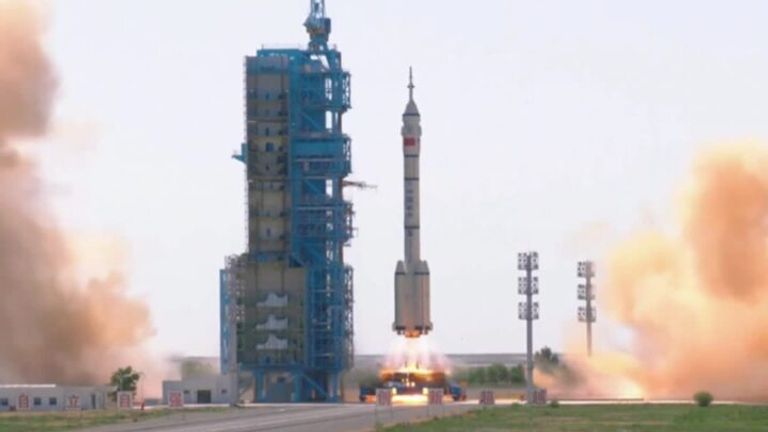
BEIJING: China launches three astronauts to complete its new space station
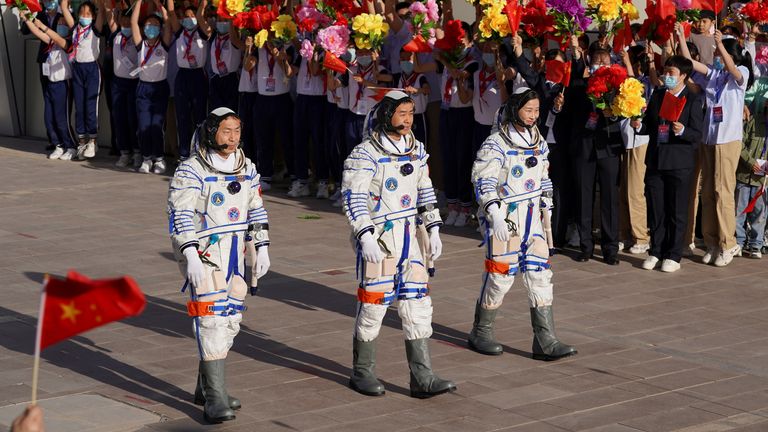
BEIJING: China has launched three astronauts to its uncompleted space station for six months of construction work.
The crew are Chen Dong, Can Xuzhe, and Liu Yang – who was the first Chinese woman in space after a previous mission in 2012.
They will work to complete the Tiangong space station by the end of this year, installing two lab modules at opposite sides of the outpost, giving it a T-shape.
Assembly of the orbiting space station, which will be roughly a fifth of the size of the ISS, began last April and is expected to be completed in November after 11 launches.
China is not allowed to be involved in the ISS after to laws passed by US Congress restricting NASA’s co-operation with Beijing due to the secrecy of its space programme and its close ties to the country’s military.
US caution regarding China’s space ambitions became law in 2011, through the so-called Wolf Amendment.
Congress banned NASA from using government funds to engage in direct, bilateral co-operation with either the Chinese government or any organisations affiliated with the Chinese government.
The law even prohibits NASA from hosting Chinese delegates at any of its facilities without authorisation from Congress and the Federal Bureau of Investigation, which leads on counter-espionage.
The China Manned Space Agency CMSA has “guaranteed” the participation of foreign astronauts in the Tiangong programme.
Last year, a government research organisation in China outlined plans to design and build “ultra-large” spacecraft, potentially miles-wide, that would be assembled piecemeal in space.
Constructing large facilities in space has taken place before, with the ISS requiring 40 assembly flights and more than a decade to build.
But the enormous constructions proposed by the National Natural Science Foundation of China would eclipse the ISS considerably, which only measures 357 feet end-to-end, and could take decades and potentially centuries to build.
These constructions are described as “major strategic aerospace equipment for the future use of space resources, exploration of the mysteries of the universe, and long-term habitation in orbit,” by the NSFC.
About the Author

Some Related Posts
-

BEIJING: Foreign Secretary meets Executive Vice Foreign Minister of China, Mr. Ma Zhaoxu February 10, 2026
BEIJING: Foreign Secretary Vikram Misri held the India China Strategic Dial -
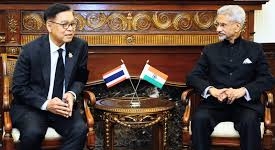
BANGKOK: Visit of Minister of Foreign Affairs of Thailand to India
BANGKOK: The Minister of Foreign Affairs of Thailand, Mr. Sihasak Phuangket -

BEIJING: “Arunachal In China”- Indian Woman’s Post On Shanghai Airport Harassment
BEIJING: A woman from Arunachal Pradesh has accused the Chinese authorities -

BEIJING: Meeting of Prime Minister with Mr. Xi Jinping, President of the People’s Republic of China on the margins of the 16th BRICS Summit
BEIJING: Prime Minister Shri Narendra Modi met with Mr. Xi Jinping, Preside -

BEIJING: 29th Meeting of the Working Mechanism for Consultation & Coordination on India-China Border Affairs
BEIJING: The 29th meeting of the Working Mechanism for Consultation & C