






-
SILICON VALLEY: Indian-origin executive named CEO of Microsoft Gaming - March 5, 2026
-
WASHINGTON: Indian-American lawyer at center of Trump’s biggest legal setback - March 4, 2026
-
TEXAS: ’15 of my cousins came here on H-1B’ - March 3, 2026
-
NEW YORK: Indian-origin doctor shares mother’s immigrant success journey in US - March 2, 2026
-
ARIZONA: Indian-origin scientist wins Arizona State University’s top Science Prize - March 1, 2026
-
WASHINGTON: Balaji Krishnamoorthy becoming Uber CFO amid ongoing visa row - February 28, 2026
-
LUCKNOW: Prime Minister Narendra Modi on HCL-Foxconn chip facility in UP - February 27, 2026
-
WASHINGTON: 55% Indian Americans Disapprove Of Trump’s India Policies: Survey - February 26, 2026
-
WASHINGTON: Trump Praises Indian American Harmeet Dhillon Amid Harvard Case - February 26, 2026
-
MUMBAI: Ranbir Kapoor to set up new RK Studios - February 25, 2026


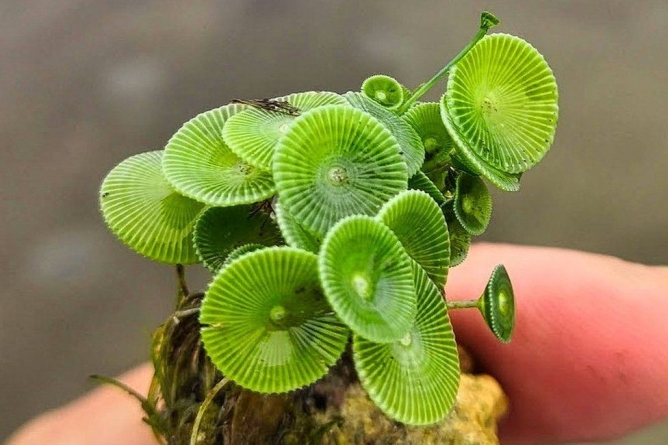
NEW DELHI: Indian scientists discover ‘mermaid’ plant species
NEW
DELHI: Indian scientists have discovered
a new plant species in India’s Andamans archipelago.
Biologists
found a marine green algae during a trip to the island in 2019.
Identification
is laborious, and it took the scientists nearly two years to confirm that the
species had been discovered for the first time.
Scientists
say this the first discovery of a species of algae in the islands in nearly
four decades.
Scientists
from the Central University of Punjab have named the specie Acetabularia
jalakanyakae.
Jalakanyaka
in Sanskrit literally means mermaid and a goddess of oceans. The scientists say
they were influenced by the fictional character Little Mermaid in the eponymous
fairy tale by Danish writer Hans Christian Anderson.
“The
newly discovered species is so stunning. It has caps with intricate designs as
if it were umbrellas of a mermaid,” said Dr Felix Bast, who led the study.
The main
feature of the newly discovered species is that the plant is made up of one
gigantic cell with a nucleus.
The
scientists spent more than 18 months sequencing the plant DNA and comparing its
form with other plants in the lab.
A paper
describing this discovery has been accepted in the the journal Indian Journal
of Geo-Marine Sciences.
Andaman
and Nicobar Islands has some of the last remaining healthy coral reefs in the
world. These reefs support a host of other organisms, including a rich
diversity of algae.
However,
there is tremendous stress from looming climate change in the form of rising
seawater temperature and making oceans more acidic, scientists say.
Rising
seawater temperature decreases oxygen concentration in water, dangerously
affecting all organisms that depend on oxygen to live, including this species,
Dr Bast said.
About the Author

Some Related Posts
-
BENGALURU: Indian scientists unravel genetic secrets behind lumpy skin disease outbreak
BENGALURU: In a breakthrough, a multi-institutional team of Indian scientis -

NEW DELHI: Brain Gain- 75 Indian Diaspora Scientists to Return to India Under New Fellowship Scheme; Most from US, Canada
NEW DELHI: Nearly 75 Indian diaspora scientists may return to India over th -

NEW DELHI: From Pune to the cosmos- India to play a key role in search for aliens
NEW DELHI: Indian astronomers are poised to play a pivotal role in the glob -

CHENNAI: India’s successful moon landing follows recent failures by other countries
CHENNAI: Space is hard, as the saying goes. As humans have endeavored to la -

BENGALURU: US looks to include Indian firms in NASA lunar project; NISAR in 2024, Isro astronaut may visit NASA Centre
BENGALURU: The White House, in a fresh statement issued on Indo-US strategi